
Emergency Humanitarian Relief Support for Women and Girls Affected by the Recent Floods in Nepal – Women for Human Rights
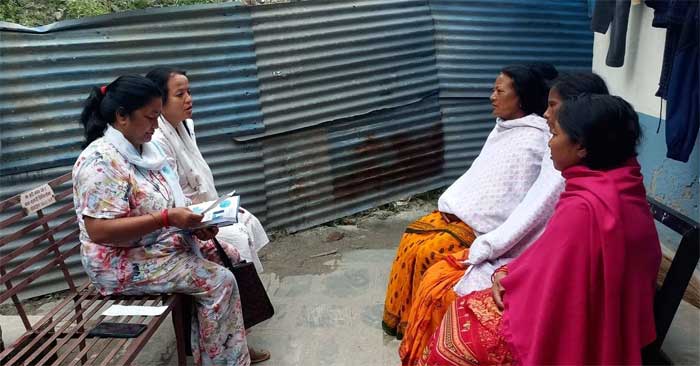
By Women for Human Rights (WHR) - WPD Partner in Nepal. On 26 August 2026, catastrophic flash floods and landslides devastated areas along the Bhote Koshi and Trishuli rivers. In response to the devastating floods, WHR is mobilising its single women-led community group in affected areas to support rescue, safe evacuation, rapid information collection, and identification of the most vulnerable women and families. WHR’s local single women leaders are coordinating with communities, local authorities, and humanitarian actors to reach those often overlooked in emergencies including single women, women-headed households, older women, and families who have lost their homes and livelihoods...
Widows of all ages: hidden victims of Humanitarian Aid Cuts

By Jordan Taylor. Humanitarian funding cuts are usually from the broader lens of “women and girls” as a single group. That framing risks concealing groups whose needs arise from particular social and legal conditions. Widows are one such group.... Widowhood can involve far more than bereavement, and often removes the widow’s claim to housing, land, pensions or family property. UN Women has identified poverty, discriminatory inheritance practices, social exclusion and violence as recurring features of widowhood across different regions... The present funding crisis threatens the support widows can receive. However, the effect on widows remains difficult to quantify because humanitarian systems commonly record them under broader categories...
Non-State Torture of widows: Harmful Cultural Traditions, Rituals and Practices – and the law

By Ally Laverty and Zoe Prokopiou. Many widows globally face traditional, socio-cultural and religious rituals and acts which amount to Non-State Torture.... Article 5 of the Universal Declaration of Human Rights which asserts that no one shall be subjected to torture. By creating a Convention on Non-State torture, States Parties will be compelled to legislate against it on a national level...
Funding cuts and the protection of widows in Tanzania

By Jordan Taylor. For many widows, bereavement is followed by the loss of their home, land and financial security. Discriminatory inheritance practices, limited awareness of legal rights and the cost of representation can leave women vulnerable to demands that they surrender property acquired during marriage. Although international law recognises women’s equal rights to property and inheritance, those rights offer little practical protection unless women can access organisations capable of enforcing them...
United Nations Treaty on Protection from Enforced Disappearance – important relevance to widows and half-widows

By Amelie Chaplin Enforced disappearance is when a person is detained or abducted by state agents or those acting with state approval, and the state then refuses to acknowledge their fate or whereabouts... The Treaty is important for widows/half widows of enforced disappearances because, alongside prohibiting enforced disappearances, it makes them victims in their own right, giving them access to the necessary rights to aid their legal, financial and emotional turmoil in the event of their husband's disappearance.
With conflict being a prominent feature of today's world, this is urgently relevant.
From Three Widows to a Movement for Justice: Reflections on the Siaya Widows Protection Act (2025) – Kenya

By Roseline Orwa. It began in a small room—three widows sitting in my living room, carrying stories that had long been held in silence....
Implementation is the next frontier—and it is not only legal, but cultural, linguistic, and deeply communal... Communities must not only know the law—they must carry it, defend it, and live it. Only then does it become real protection rather than written promise.
Implementation is the next frontier—and it is not only legal, but cultural, linguistic, and deeply communal... Communities must not only know the law—they must carry it, defend it, and live it. Only then does it become real protection rather than written promise.
Improving Healthcare for Poor and Rural Widows – Widows Rejoice Mission, Nigeria

By Zipporah Omowunmi Adenike Oladejo. At the Widows Rejoice Mission, we firmly believe that healthcare is a fundamental right, not a luxury reserved for the wealthy. Taking matters into our own hands, the Mission recently participated in a targeted medical outreach for poor and vulnerable widows... As we commemorate International Widows Day 2026, the Widows Rejoice Mission makes an urgent appeal to policymakers, government officials, health agencies, and parastatals across developing nations...
Widows’ Economic Empowerment in Abia State, Nigeria – Widows Development Organisation (WiDO)

By Dr Eleanor Nwadinobi. In 2018, WiDO received a grant from the Global Fund For Widows. A new palm oil mill was provided, a well was dug and they were taught to run a Widows Savings and Loan Scheme (WISALA)... These women are now role models to other widows in the community because of the rapid transformation in their lives.
When Grief Meets Paperwork: Widowhood, Legal Status and Exclusion in Cox’s Bazar

By Sonia Ali. In refugee camp settings, paperwork is not merely background administration. It determines whether someone can collect food assistance, access healthcare, retain shelter space, or be recognised as head of household... For Rohingya refugees in the Cox’s Bazar refugee camp in Bangladesh, legal recognition is limited and largely structured through humanitarian registration systems. While registration enables access to aid, refugees do not hold citizenship status in Bangladesh and face restrictions on formal employment and freedom of movement. As a result, many households remain highly dependent on humanitarian assistance...
Conflict Affected Widows: Silence and Absence of Accountability allows Injustice

Following on from WPD's successful CSW 70 event on conflict affected widows, WPD held an in-person event at the House of Commons on April 27th... The purpose of the event was to hear the demands for justice, visibility and safety for widows, half-widows and child widows living in conflict and post conflict settings, whose numbers increase daily, but who largely remain unheard and invisible to the institutions that should protect them.
Widows in Gaza and the Impact of War on Their Lives and Their Children
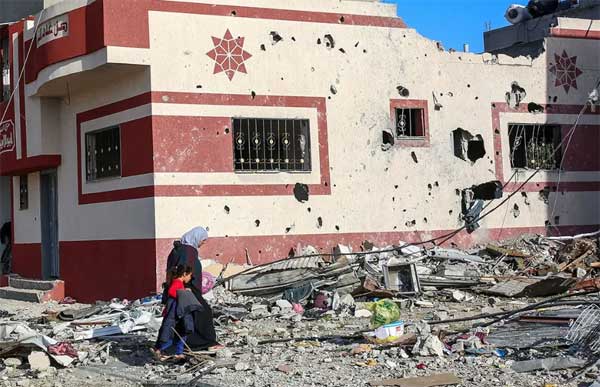
By Hossam Madhoun. Since the outbreak of the war in the Gaza Strip in October 2023, widows have emerged as one of the most affected and vulnerable groups in society.
The loss of husbands has forced thousands of women to suddenly become primary breadwinners in an environment marked by widespread destruction, collapse of essential services, and severe insecurity.
Estimates indicate that around 22,000 women have become widows during this period, reflecting a deep, multi-dimensional humanitarian crisis...
Birthday request from our Founder and President – Margaret Owen, OBE
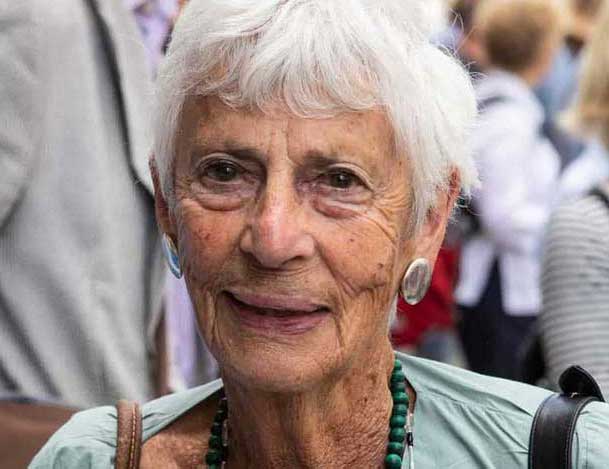
"For my 94th birthday, I'm asking for donations to Widows for Peace through Democracy. Widows and half-widows are in desperate need of a collective voice to inform the international community and their governments of their rights for restorative justice, protection and reparations.
Please help us to ensure their voices are heard, to inform policies - national and international..."
