
Widows for Peace: Bringing Widows’ Voices to the UN #CSW67
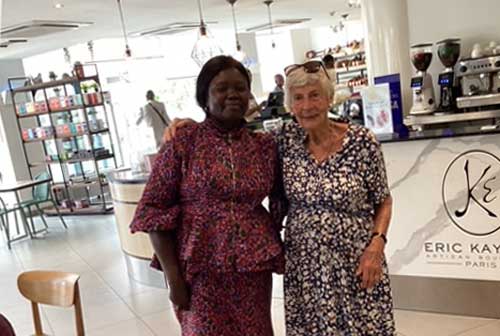
Widows for Peace through Democracy CSW67 Parallel Event, with Co-Sponsor: Global Call to Action against Poverty (GCAP) – 14th March 2023
Rural Widowhood: Culture, Conflicts, Covid, Climate Crisis
 Moderator: Susan O’Malley, Widows for Peace UN Representative and former Chair of the Committee on the Status of Women, New York.
We heard from rural women representing widows from six countries – speaking of their needs, what their NGOs are doing to support widows and what action their governments should take.
We are collectively in support of the UN General Assembly Resolution on the Situation of Widows, UN Security Council Resolution 1325, the Widows’ Charter and the Sustainable Development Goals (SDGs).
Speakers:
 Roseline Orwa, Executive Director of Rona Foundation, Kenya.
Kenya is emerging from a long drought resulting in loss of heath, travelling long distances for services. Rural widows lack the terminology to speak of their situations.
Roseline was widowed herself 14 years ago.
Challenges and issues:
- Cultural and harmful traditional values – woman’s status is based on the husband’s status;
- Gender-based violence is perpetrated by people they know or who are familiar with them, meaning that people targeting widows are known to them. There are gaps inthe law; programmes are not targeting them, as those assumed to protect them are the perperatraters of violence;
- Stigmatisation.
- Road traffic dangers. Many women lose husbands due to motorcycle accidents.
Actions we are taking and tools we are using:
- UNGA resolution – need to move to implementation;
- Data;
- NGO programming to improve access of assets for widows; offering social capital;
- Focus on access to decision making so that widows can speak language of decision making to change policies that impact them at all levels of government;
- Collectively, NGOs centered on widowhood have a huge role in Kenya to be a role model.
 Jacqueline Musugani, Initiatives des femmes en Situations Difficile pour le Developpement Durable et Integre (IFESIDDI), DR Congo, and President of the Network of Women Farmers of South Kivu.
Jacqueline is based in east DR Congo and was widowed eight years ago.
Widows are often victims of social injustice:
- Local customs result in the loss of widows’ rights;
- Percentage of widows in rural areas = 50%; in big cities widows are almost 30-50%;
- Widows suffer in silence and have no social and health support, particularly of widows of war crimes;
- Don’t have inheritance rights;
- In-laws’ family will grab all the lands and the produce from it. Widows suffer from lack of decent housing;
- Rural areas are where the conflicts exist;
- Have been victims of violence and rape – testimonies she gathered, many women were subjected to rapes in the presence of their children/families; have lost husbands in wars;
- Case of widows who live with children in one room. Children do not go to school, nor have access to healthcare;
- Many widows suffer from malnutrition. Life expectancy is not more than 45;
- Being a widow in the village is seen as a curse;
- 80% of widows during COVID have faced crises – lost revenues in the informal sector or condemnation; almost 20% have died leaving children as orphans with lack of support/housing;
- Poor infrastrucure – rural areas lack roads to the cities;
- Widows cannot move closer to services; lack access to vaccination for themselves and their children;
- Climate change has impacted fields due to flooding; problem of drought causing hunger. Widows are more victims as they are left behind and face malnutrition and hunger;
- In Jacqueline’s east province, the security situation is difficult.
Actions we are taking:
- We work with displaced widows who came to big cities and are facing difficulties;
- We gather 150 women movement organizing learning activities e.g. making soap; we help them with new agricultural techniques because are not fertile so we help them to buy more land. Planting soy beans helps fertilize the land. Give them opportunities to talk freely about their lives. They are in a safe place and try to overcome their trauma;
- Give advice and support where we can;
- Help widows to rebuild confidence; we share her experience; traumas are similar so we can help each other.
What we want from our government:
- Our government to take into consideration situation of widows;
- We try to present statistics about widows when to the Ministry;
- We work with 750 widows and we want the government to take them into account.
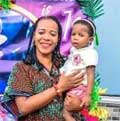 Caroline Uskikpedo-Oliseowe, Nigeria, Executive Director, Noble Delta Women for Peace & Development Intl, Deputy Secretary for Africa-International Human Rights Commission and GCAP Africa representative.
Caroline is based in Nigeria.
Challenges and issues:
- Widows face economic insecurity, stigmatized; harmful traditional practices; they can be old or young; face financial/economic hardship; discrimination; have left with no account of how their properties will be shared; many children end up on the streets; widow is accused of witchcraft accused of death of spouses;
- Cultural practices: woman must mourn her husband for a year; must wear black; forced to drink the water they used in cleaning dead husband; ritual cleansing;
- How to get support for widows – 2015 we had Nigeria Niger Delta state
Actions we are taking:
- Our mission is to promote enduring peace focusing on women, peace building, climate change issues, etc;
- Entered into partnership in 2019 supported by World Bank through state government;
- Find out data 20,107 widows in 2020 were involved with monthly stipends; skill training; financial support for small scale businesses;
- June: come together to celebrate key moments in International Widows Day.
 Diana Kamande HSC, Founder/Executive Director, ComeTogther Widows & Orphans Organization, Kenya
The organisation works with Somali widows in Kenya.
Challenges and issues:
- Most of Somali are refugees. She visited them. Most are from a polygamous background; man dies leaving up to 4 wives;
- Impact – forced to flee; migration has created significant challenges including loss of social support networks;
- Exposed to stigma and other barriers;
- Risk of violence and exploitation – sometimes found in sexual exploitation including their daughters;
- Effects of poverty as refugees making them more vulnerable;
- Low emotion well-being;
- Lack of medical care – vaccinations, prenatal care; common illnesses;
- Most daughters leave school compelled to work;
- Most daughters were not able to get skills training due to lack of finances.
Impact of marginalisation on widows:
- Often disadvantaged to access to resources and basic services including family planning particularly for young widows (partnered with Ministry of Health);
- Low participation in decision making. We go to grassroots women not in hotels or in capital;
- Gender disparities – we reached to different government officials with support for education for children.
Actions we are taking:
- Since 2105 we have been partnering with the government;
- We lobbied government in 2018 to count the widows; widows were counted in 2019 census via government statistics. 7.4% of Kenyan women are widows (includes Somali widows). Data is critical;
- We help the Somali refugee widows to build social capital via forming groups and reached out to Global Fund for Widows which has been our partners which has helped widows to get social support network, savings and loans;
- We have an MOU with different ministries in government e.g. Public Service; Labor and Social Protection;
- We have a partnership with legal society of Kenya and developing an MOU with them;
- We get the widows to obtain social health support and to find themselves again.
Interventions by the Kenyan government and others:
- UN High Commissioner for Refugees recently invited them to share with them in Geneva about daughters and what can be done;
- Kenyan police service is responsible for maintaining law and order – help them with dealing with widows;
- The Refugee Act;
- Community Based Systems;
- Organisation support;
- Nomadic education centres;
- Sexual Offence Act;
- National Policy Framework for Widows 2013.
Intervention gaps:
- Lack of provision of quality education;
- Inadequate resources; lack of qualified teachers;
- Need for more targeted programmes;
- Not aware of their rights;
- Lack of legal aid;
- High fees for legal regress.
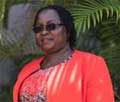 Christine Augi, Co-founder of Foundation for Integrated Rural Development (FIRD), northern Uganda.
Christine was widowed 26 years ago.
Challenges and issues:
- Young widows – they take away your land and take away your voice;
- Region had war for over 20 years so many became widows due to war and HIV/AIDs;
- Climate change is affecting us. We don’t have agricultural funding. Older widows become malnourished;
- Some societies do not value women/widows;
- Some girls have had early marriages or go into the streets;
- Need to show widows that someone cares about them;
- Would love support.
Actions we are taking:
- We help to feed the children with any nutritious food we can obtain, for example small fish;
- We have bought some sewing machines to learn how to get some money. We have seven centres.;
- We do what we can to show the widows that we care about them.
What we want from our government:
- Christine tried for political leadership position but didn’t have money or support and was not taken seriously without a husband. A number of young girls have been elected and seen some local government laws but not nationally. We (widows) need representation in Parliament;
- Need widows’ voices to be heard by governments at all levels.
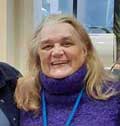 Dr Lyudmyla Porokhnyak, President and Chairwoman of the National Council of Women of Ukraine
Lyudmyla’s translated contribution presented by Alice Fookes, Widows for Peace Trustee.
On the 13th March, Alice met with Lyudmyla, president of National Council of Women, a medical doctor and leads 19 organizations under the Council. She has 12 refugees staying in her house near Kyiv. Lyudmyla was also present at this event. The contribution was translated by Iryna Kurowyckyj, UN Representative of the International Council of Women and past President of the Ukrainian National Women’s League of America (UNWLA).
Challenges and issues:
- There are many elderly widows. Men, on average, live to 62 years and – in addition – there is the ongoing nine year war;
- Widows in cities are doing much better who can get together, form groups and support each other;
- Rural widows: difficult for them to get together during war time. Rural widows are territorial and not want to meet up with other widows. Rural widows’ confidence has been knocked and are reluctant to accept city widows;
- Extremely hard to persuade rural widows to move location; the culture/history is tied to their land;
- Rural widows are not used to a community culture – trusting others is tough.
Actions we are taking:
- We work with rural widows and are currently working with women who live in de-occupied villages, creating centres for self-help, mutual support and development.
- We have purchased computers to take to rural widows and to train them.
- Widows in cities and towns are going out to rural widows to talk about the benefit of forming support groups.
Also see: Widows for Peace interview with Dr Lyudmyla Porokhnyak, by Alice Fookes.
Comment from Susan O’Malley – moderator (& UN Representative for WPD): “We need to compile these stories and get them out.”
Respondents:
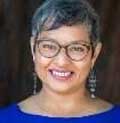 Lopa Banerjee, Director of the Civil Society Division at UN Women, and Executive Coordinator of the Generation Equality Forum.
How UN Women might be involved:
- Have heard deeply moving and informing accounts of loss, stigma, poverty, harmful practices; sense of erasure of themselves of widows; excluded a widows and intersectional additional issues black, child; rural widows; have a disability; LGBTQ widows;
- Now we have an International Widows Day and a UN resolution gives us the legal framework.
What we can do?
- Make visible women and girls (250 million) widows via presence and development and investment in globally comparable data that measures conditions and shows their reality (disaggregated data) to show full picture and information gaps that exists- a way to measure economic and political exclusion;
- Make widows visible for representing their voices and leadership in all spaces where conversations on addressing inequality are taking place;
- Able to create and support networks of solidarity and community support that help widows.
Policy actions that are needed:
- Focus on reforms for economic opportunities; political opportunities. Having political spaces and voice to demand visibility and services;
- Stronger focus on body of work that is on ending discriminatory laws that exclude, discriminate and stigmatise widows;
- Making visible through data policy action for investment in it;
- Advocacy that has legs to stand on with the UN resolution to draw attention to SDGs (leaving no one behind).
CSW67 Priority theme on innovation and technology and addressing gaps:
- Technology is opening new doors and represents unprecedently opportunity to create new ways to address inequality and new ways of inclusion;
- Can provide widows in areas that are harder to reach; offers opportunity to look at innovative ways to create livelihoods and inclusion;
- Critical that technologies are accessible and affordable – school and public education programmes and addressing stigma;
- Improved access to information on markets, health, essential services;
- Provide new economic opportunities; create solidarity communities; leverage data tools to get better understanding of demographic understanding;
- Nothing can replicate the lived experience of widows of what they see as solutions.
 Irene Chinje, Area President, East, West and Central Africa, Associated Country Women of the World (ACWW)
Irene lives in Cameroon.
In Africa, those in rural and semi-rural areas experience things differently to those in the government – rural women face more traditional values.
The government of Cameroon is not doing a lot with widows, thinking it is a cultural issue.
Today has been inspirational.
NGOs exist but operate individually.
Concrete data is needed.
Roads do not reach rural widows.
The voices of women need to come together.
 Yemi Falayajo, Deputy Representative of UN WOMEN in Liberia.
Yemi’s mother was widowed twice.
Speakers have spoken with so much passion and with information on what we should and can do.
Finding disaggregated data is key to not leaving widows behind. Cycle continues if not dealt with by external intervention.
Building capacity of widows is also key.
Liberia is a post conflict country and a fragile state of democracy.
Who brokered peace in Liberia and in Rwanda? Women whose husbands who died and who became heads of households. They found their voices and came together, defying ethnic and geographic differences.
We need to look at widows’ strengths and build their capacity to self mobilize; self advocate beyond widowhood.
Technology has made it easier for their voices to be heard but not all have access to it.
Concluding Remarks
Margaret Owen OBE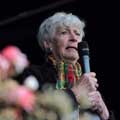 , Founder and President Widows for Peace through Democracy.
Margaret was widowed 32 years ago. She is a human rights lawyer and headed law at International Planned Parenthood.
Margaret’s involvement with widows’ rights was ignited when, many years ago, a widow from Malawi visited her home in London and exclaimed her surprise that Margaret was permitted to stay in her home after becoming a widow.
“It has been moving and heart breaking as well as encouraging of what you are doing, giving widows a voice to be heard at all levels of government…
Appalling and similar situations exist in other countries – as well as Africa which we have heard about today.”
Margaret emphasised that action that is needed now. She hopes that Agreed Conclusions of CSW67 will at least mention widows* and that, when we disaggregate data, we need to include marital status.
The explosion of the number of widows is related to conflict, Covid, etc.
And Margaret further emphasises that we must talk about half-widows, who are women who do not know what happened to their husbands and have no closure.
What we need to do now and what is missing and needed:
- Fill data gap;
- Hold governments accountable to violence and stigma that happens to widows;
- Need to have UN Security Council to include widows in peace action;
- UN Women to support regional conferences;
- Security Council commission a special report on widows and have a special rapporteur;
- End of November UK had a conference on sexual violence in conflict but nothing on widows;
- Help rural widows to become fluent in using the digital technology;
- More support from governments, World Bank, Security Council to criminalize discrimination acts that condone violence against widows. Implement laws that exist;
- UNGA resolution must be implemented via widows’ voices;
- Support and funding for capacity building;
- Special attention must be paid to refugee camps, which have many widows;
- CEDAW must have a General Recommendation on widows;
- See UN draft an Everyone Woman treaty as CEDAW does not address other forms of violence including cyber and widow violence;
- Establish more networks to share best practices;
- Widows must be decision making roles. 1325 Why aren’t widows included in peace accords?
- Send record of this event to the Security Council, Victims UN Under Secretary;
- Lobby your governments to ensure that widows are included in Agreed Conclusions of this CSW.*
*See Widows for Peace – Press Release: Widows included in the UN #CSW67 Agreed Conclusions
Comments from attendees:
Sylvia Beales, WPD Trustee: Could UN Women put together a programme on widows to take these ideas forward in partnership with civil society active with widows at the grassroots and globally?
Susan Lee: Greetings from the US Women’s Caucus at the UN. I am Susan Lee from New Bedford Massachusetts USA. See my study of rural widows in Cambodia here.
Acknowledgements
This article is based on the extensive notes taken by Katherine Kline during the event and only slightly adapted. With huge gratitude.
(Katherine is Co-Chair of the General Assembly of Partner’s Older Persons Partner Constituent Group and and Recording Secretary for GAP).
And many thanks also to Global Call to Action against Poverty (GCAP) for all the work, support and help with hosting the event.
Also see:
- Video: Margaret Owen OBE’s impassioned closing remarks and calls to action on behalf of widows of all ages, everywhere. With many thanks to Carolyn Moor, founder of Modern Widows Club (WPD Partner), for the recording.
- Widows for Peace – Press Release: Widows included in the UN #CSW67 Agreed Conclusions
- WPD Statement on Rural Widows – #CSW67