
Respect for Widows’ Human Rights: a Call to Action – Widows Rejoice Mission, Nigeria

Widows Rejoice Mission marks its 5th Anniversary calling for respect of widows human rights
August 2024
Widows Rejoice Mission is a civil society NGO in Nigeria, dedicated to the plight of widows in society, and member of the Widows for Peace Global Network.

“I’m highly delighted with the successes we’ve recorded since we began this Foundation about five years ago.
My happiness is that a lot of our beneficiaries are giving good testimonies and inviting new widows every year.”
Adenike Oladejo – Director and Founder of Widows Rejoice Mission.
Speaking to journalists after the well-attended event, Ms Adenike expressed happiness that the Foundation which she started five years ago has impacted greatly on widows.
She noted that with increased support from government, philanthropists and corporate organisations, her Foundation will be able to touch the lives of many more widows.
Supplies, mentoring, training – and a call to action
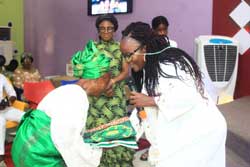 The annual event attracted hundreds of widows from all parts of Lagos including; Makoko, Ijegun, Mowe, Badagry and Mile 2, amongst others.
The attendees received various food items and an empowerment programme.
They were also mentored on their rights and provided with self-reliance training to aid widows through challenging times.
Adenike Oladejo called on the Nigerian government to make specific policies that will recognise the rights of the widows, emphasising that the government should criminalise the abuse of widows, and provide a good health care system for widows in Nigeria.
Investing in Widows Globally – Alice Fookes, Widows for Peace through Democracy (WPD)
Alice Fookes spoke from the UK on Investing in Widows Globally.
We all need to urge government and government agencies to:
- Reduce the suffering that widows endure by raising their status regardless of age, location, legal system they live within (as well as all other identifying factors such as inclusion of marital status), and ensure that widows are not left behind, as agreed in the UN General Assembly Resolution A/76/L.40.
- Employ education to end occupational segregation and increase widows’ access to formal economies by offering skills-based and vocational training to widows of all ages especially across all aspects of science and technology;
- Empower all widows by giving them the tools, resources, and knowledge to actively participate in financial and all aspects of decision-making at household, community, national, and international levels including training them to assume leadership positions in all areas of economic, political and social and educational development;
- Enable opportunities by raising awareness and understanding of the positive long-term impact of government investment in widows. It is only when these principles are applied within a human rights centered approach that widows and their families will be able to attain gender equality.
Financial resources are necessary for widows to realise their human rights and so we ask for widow-aware legislation and government policies. Social protection systems that respond to the marginalised widow are nothing without widow-sensitive staff training of the judiciary, political and within national and local municipalities.
In addition to financial and educational or training resources, widows need legal information and explanation to understand their property and land ownership rights.
Six key practical actions for us and to inform our legislators, politicians, policy writers and national and local government officials
- Check out and promote our Widows Charter;
- Put together a Widow-affirmative on-line training that could be used to promote knowledge and understanding of widows and widowhood amongst politicians, the judiciary and civil servants;
- Use the UN General Assembly Resolution on the Situation of Widows to inform and promote human rights of widows – ensuring widows are not ‘left behind’;
- Lobby for quality Data Collection and Monitoring on Widows. Include ‘marital status’ in all data collection enterprises and work on representation of widows to participate when economic and social policy design and implementation is discussed. Demand government to collect disaggregated data on widows’ social economic status, access to educational resources and entry into the workplace and share instances of discrimination;
- Widows Human Rights deserve protection in Law. Find ways to work with judiciary, local politicians to prevent disinheritance of widows and access to social protection programmes;
- Lobby government for all to have by law, readily accessible birth, marriage and death certificates available to all widows and their children so that they can apply for any social protection owed to them.
See more:
- Widows Rejoice Mission website
- Widows Rejoice Mission on Facebook
- Widows Rejoice Mission – ‘X’ (Twitter) – @WIREM_23
- Widows Rejoice Mission – Instagram – wirem_2023
- Widows Charter
- UN Resolution on the Situation of Widows
- Eradicating Poverty Suffered by Widows, through Technological Innovations – Widows Rejoice Mission
- Benefits of Innovation and Technology to Widows in Crisis – Widows Rejoice Mission